Crypto is making a splash in U.S. elections — but chiefly in jabs about industry influence
- The crypto industry's campaign spending doesn't make ads that mention crypto, so the main place the topic has come up in the elections is as a political weapon wielded by Democrats bashing the sector and its ties to President Donald Trump.
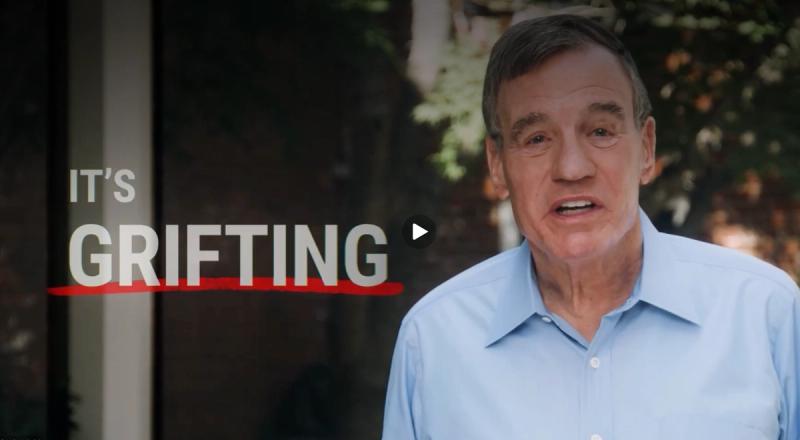
- Candidates such as former Senate Banking Committee Chairman Sherrod Brown and incumbent Virginia Senator Mark Warner are flagging the industry's outsized political spending and close relationship with the president.
Crypto is finally being talked about in U.S. political campaigns, but it's certainly not in a light that the industry would choose.
Though digital assets advocates have long referenced a grassroots uprising of crypto-focused voters that can swing elections, the industry's own massive campaign spending has carefully decided against even mentioning the financial technology in the ads it buys for favored candidates. But crypto is having a moment in the midterms, anyway, as the sector's critics paint its political involvement as a venal influence on congressional campaigning.
A number of Democratic candidates have raised crypto as a black mark to suggest improper corporate sway over their political adversaries and more generally as a factor in corruption accusations against President Donald Trump and his administration. In this environment, in which voters are now weighing government corruption as a top political concern, it may carry consequential weight.
In a current campaign ad from Senator Mark Warner, the Virginia Democrat seeks to tarnish Trump and his allies by highlighting the billions Trump has made in office and the jet he accepted as a gift from Qatar. The ad also notes that Trump made hundreds of millions of dollars off of his "crypto memecoin," followed by Warner saying: "That's not governing. It's grifting. The corruption needs to stop."
And in former Senator Sherrod Brown's bid to return to the Senate for Ohio, the Democrat has embraced the massive crypto spending against him as a point of favor.
"The crypto/data-center crowd are up to $40 million now," Brown, the former chairman of the Senate Banking Committee, said in a recent Pod Save America interview, noting the industry's opposition ads in Ohio were largely bankrolled by a crypto political action committee (Fairshake). "They know I'm going to hold them accountable," Brown said.
Fairshake spent tens of millions trying to get him voted out of office two years ago, and the super PAC started major spending again to keep Brown out. As a result, he offers an us-versus-them (regular voters against tech billionaires) narrative on the campaign trail. The ex-senator frequently lumps crypto and data centers together in his speeches, accusing those tech elements of trying to buy the incumbent Republican opponent Jon Husted's seat "because they know I'll never work for them," Brown said in a campaign video spot.
Oliver Gilbert, a Democrat running for Congress in Florida, has also made his crypto-world political enemies an element in his campaigning — especially after the Fairshake super PAC spent $2 million in a failed attempt to defeat him in the primaries.
"Trump and his crypto con artist billionaires just put a target on my back," he said in one ad after the industry's campaign operation came after him. Gilbert accused crypto interests of lavishing dark money to spread lies about his record, and he said he'd fight to "protect seniors from crypto scams."
Minnesota Senate candidate Peggy Flanagan and Illinois Senate candidate Juliana Stratton (another of Fairshake's most high-profile losses) both flagged their crypto friction during their primary races. Stratton posted a video describing the millions a "MAGA-backed crypto PAC" spent in attack ads against her.
The Trump midterms
Just as President Trump has urged his supporters to think of him when they vote, the congressional midterms are widely viewed as focused on his presidency. And part of that record has been his aggressive crypto push and his substantial personal benefits.
Voters are worrying about self-dealing political behavior more they have before. A Fox News poll of voters this month showed that "government corruption" was the top issue of concern, showing 88% of respondents were at least very concerned about it — higher even than inflation, gas prices and healthcare.
Many Democrats, including Warner, are insisting that the crypto industry belongs in the conversation about Trump administration corruption.
"We are getting peppered on a weekly basis on the latest way the president is trying to profit off of this," said Will Ragland, vice president of research in the advocacy department at the Center for American Progress.
Since 2024, Ragland said the industry decided to lash itself to Trump and his political allies, and a major piece of evidence is the president's primary super PAC, MAGA Inc. Crypto interests represent the leading industry contributors to the PAC, according to an analysis from his organization, noting almost $89 million in contributions from the sector, significantly outpacing other industries.
The industry’s close relationship with Trump, who controls a personal crypto empire himself, has brought some benefits to the sector, such as the crypto-friendly regulators who have dismissed enforcement actions and are writing new rules, but it may have come at a cost greater than the price tag on campaign contributions.
Crypto companies "made a very poor strategic decision early on here," Ragland said. Though they've supported candidates from both parties, the greater lean was toward Trump and congressional Republicans. "To some extent, it worked, in terms of seeing investigations dropped and having a direct line into the presidency," he said, but now the accusations against Trump (which often highlight his crypto earnings that Ragland's organization live-tracks, currently around $2.4 billion) have reached a "fever pitch."
"It didn't have to be this way for the industry," he said, predicting that it'll be "an uphill battle to climb back from."
For its part, the Blockchain Association — an advocacy group in Washington — said it’s just trying to get rules that "don't depend on who sits in the White House or who controls Congress."
“As we all know, politics has become more polarized, and industries across the spectrum have been pulled into that fight at one time or another," said the group's chief policy officer, Lindsay Fraser, in a statement. "But that doesn’t change what we push for. We’ll keep working with Democrats and Republicans alike, because our focus is on making sure the United States leads in this technology, leads in its share of developers, and leads in innovation.”
But the president's crypto connections may also have led to the failure of the Digital Asset Market Clarity Act — the market structure bill that represented the industry's biggest goal in Washington. Trump's business ties to crypto contributed to demands from Democratic lawmakers that the bill include stringent ethics constraints on government officials, and what the president was willing to accept was deemed by them to be insufficient. So the bill didn't advance in the Senate last month, and its chances are slim to see further action for the rest of the year.
Spending continues
The industry's dominant super PAC, Fairshake, has spent vast sums of money on trying to get crypto-friendly candidates into Congress, counting a large majority of successes in this year's primaries. They're supporting dozens of incumbents so far in the general election, and opposing Brown with at least $40 million in what may become the most expensive congressional race in U.S. history. The many ads they've purchased nationwide focus on issues the PAC believes will sway voters, and a spokesman confirmed that the crypto group's ads don’t mention crypto, the technology that's paying for them (mostly through the contributions of Coinbase, Ripple and a16z Crypto).
For voters, crypto hasn't yet proven to be a decisive issue, as much as the industry has hoped it would be. A CoinDesk poll released in May showed crypto was very low on voters' list of priorities. (The same survey revealed people didn't trust the Trump administration to oversee digital assets.)
The crypto sector's urgent desire for a U.S. law that governs its markets now faces the November 3 elections. The outcome could shift the U.S. House of Representatives to a Democratic majority, and possibly the Senate, too. That would mean a very different experience on Capitol Hill for crypto lobbyists, and the odds get longer to pass a major bill that the crypto industry can support.
As they try to join what they hope will be a Democrat majority in the House and Senate, Democratic candidates keep banging the crypto drum. When he ran a key committee in the Senate, Brown had the authority to deflect the industry's attempts at legislation, and if he gets back in and finds himself in a similarly powerful role, the situation may be even worse.
As Brown promised in a speech earlier this month on C-SPAN, "They know I'm going to take them on."

- 1Ethereum’s four-minute settlement plan could lower the cost of moving crypto2 hours ago
- 2Crypto traders seek shelter in bitcoin as altcoins slide and ETF flows wobble3 hours ago
- 3Bitcoin slides below $82,000 as AI doubts return, with DeFi tokens leading declines3 hours ago
- 4Crypto traders price India telecoms company Reliance Jio's IPO at about $110 billion4 hours ago
- 5Live updates: Bitcoin slumps below $82,000 as markets go risk off on AI selloff, oil surge4 hours ago
- 6Asian stocks tumble, bitcoin retreats as China enters bear market5 hours ago
- 7China seeks to seize 61,800 BTC tied to $5.7 billion fraud scheme8 hours ago
- 8Solana’s biggest network change since 2020 is live. Here’s how users benefit9 hours ago
- 9Bitcoin ETFs attract $1.08 billion in 3 days but it may not be enough for a steep rally9 hours ago
- 10XRP Ledger bug fix moved to November after validator support dipped for two hours9 hours ago
Beyond the Risk-Free Rate: Diversified Real World Yield in Productive Stablecoins

Beyond the Risk-Free Rate: Diversified Real World Yield in Productive Stablecoins
Diversified RWA stablecoins sustain 5-7% yield from real credit as crypto funding compresses to ~4%. GENIUS pushes yield off-chain; TAM grows to $4B in 3 years.
Diversified RWA stablecoins sustain 5-7% yield from real credit as crypto funding compresses to ~4%. GENIUS pushes yield off-chain; TAM grows to $4B in 3 years.
Why it matters:
Diversified RWA stablecoins sustain 5-7% yield from real credit as crypto funding compresses to ~4%. GENIUS pushes yield off-chain; TAM grows to $4B in 3 years.

At the White House, crypto policy vacancy looms large

Trump’s potential AI czar, Jay Clayton, helped pioneer the SEC’s crypto crackdown

Crypto industry gave $8 million to Clarity Act lobbyists who didn't close the deal
Related stories

Fireblocks denies report of $2.5 billion acquisition talks with Visa

Here’s what happened in crypto today

SoFi unveils bank-issued tokenized deposit for yield-bearing crypto funds